Common Reasons Why Work Visa Applications Get Rejected
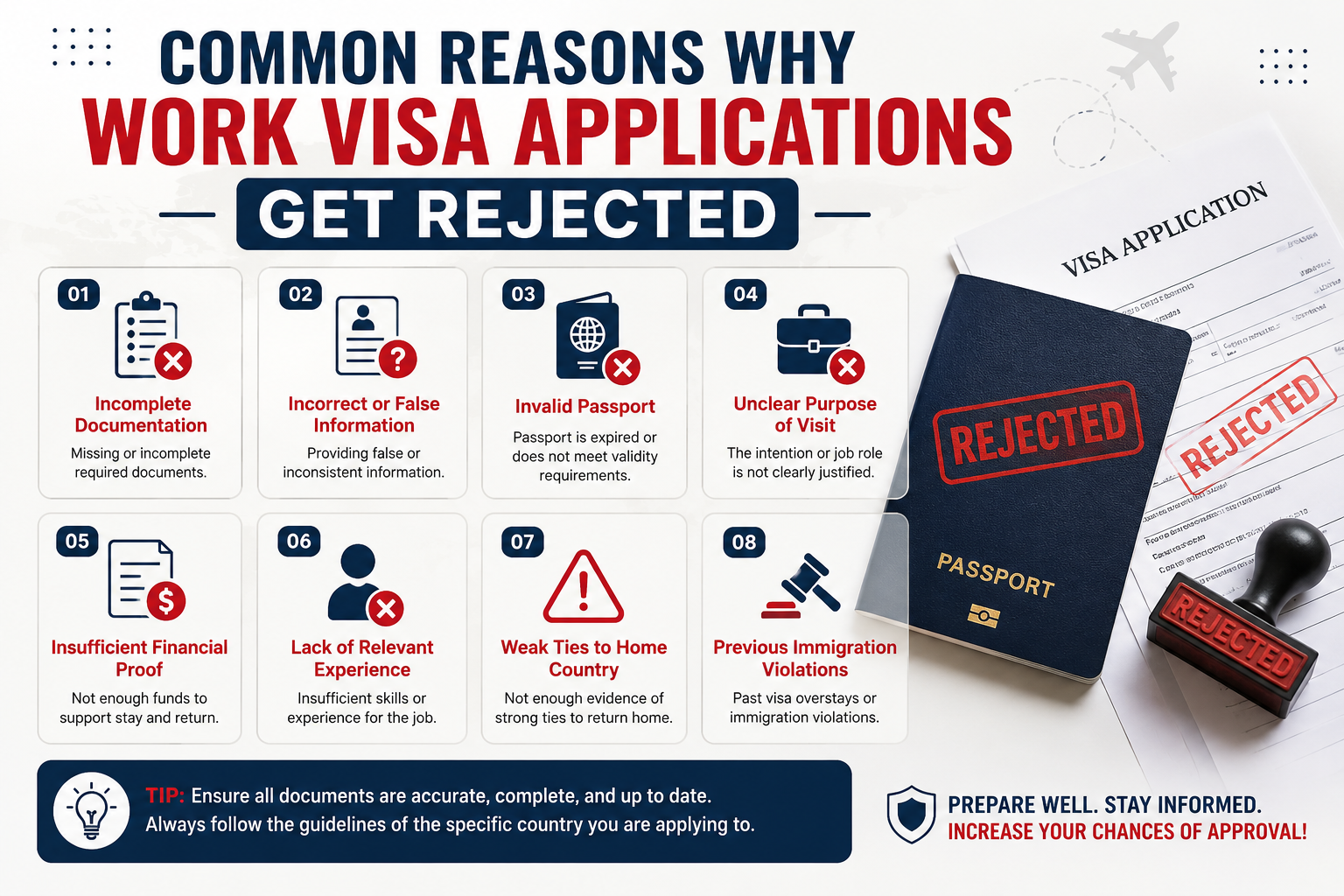
Thousands of people apply for work visas to countries such as Saudi Arabia, the UAE, Qatar, Oman, Romania, Poland and South Korea every year. There are a lot of applications that are approved, but many others are rejected because of avoidable mistakes. Knowing the most frequent visa rejection causes can assist you in getting ready a better application and boost your odds of being able to work overseas. If you are thinking of going overseas, it is important to know what immigration officials want. In this guide, we'll explain the most common reasons work visa applications are rejected and how you can avoid them.
1. Incomplete Documents
One of the most common reasons for visa rejection is submitting incomplete or inaccurate documents. All paperwork must be complete, valid, and match the information in your application. Common due diligence issues are:
• Missing passport copies
• Expired passport
• Incorrect visa application forms
• Missing educational certificates
• Incomplete employment documents
• Unattested
or uncertified documents
Advice: Make sure to check all documents twice before submitting and verify
that the details on all documents are correct with regard to your official records
and passport.
2. Invalid or Fake Job Offer
A significant number of working visa holders take up jobs
abroad without realizing that they have been scammed by an unregistered
overseas employment agency. Employer information is verified by immigration authorities
and visa applications might be denied if the job offer cannot be authenticated.
Before applying:
• Verify
the employer's credentials.
• Confirm the employment contract is genuine.
• Use a government-approved overseas recruitment agency.
• Never pay for jobs that seem "too good to be true."
3. Incorrect Information on the Application
Even with goodwill, giving out false or conflicting information can result in rejection. Examples include:
- Different spellings of your name
- Incorrect passport number
- Wrong employment history
- Mismatched educational qualifications
- False salary information
Always ensure that the details on your application match your supporting documents.
4. Failed Medical Examination
Many countries require applicants to pass a medical examination before issuing a work visa.
A visa may be refused if:
- Required medical tests are not completed.
- The applicant is medically unfit according to the destination country's regulations.
- Medical reports are incomplete or invalid.
Schedule your medical examination only through authorized medical centers.
5. Criminal Record or Security Concerns
Candidates with serious criminal or legal records may be denied visa. Permits are issued for working in other countries, and background checks are performed before that. Ensure that a police clearance certificate is genuine, valid and from the right body if a police clearance certificate is required.
6. Insufficient Supporting Documents
Depending on the destination country, additional documents may be required, such as:
- Employment contracts
- Experience certificates
- Police clearance certificate
- Medical reports
- Financial documents (where applicable)
- Degree or diploma attestations
Missing any required document can delay or result in rejection.
7. Employer or Sponsor Issues
Sometimes the applicant has done everything correctly, but the employer fails to meet immigration requirements.
Possible employer-related issues include:
- Invalid company registration
- Expired recruitment license
- Incomplete sponsorship documents
- Quota restrictions
- Labor approval problems
Applicants should confirm that the employer is authorized to hire foreign workers.
8. Passport Validity Problems
Most countries require passports to remain valid for at least six months beyond the intended travel date.
Common issues include:
- Passport nearing expiry
- Damaged passport
- Missing pages
- Incorrect personal information
Renew your passport before beginning the visa process if necessary.
9. Previous Immigration Violations
If an applicant has previously:
- Overstayed a visa
- Violated immigration rules
- Worked illegally
- Been deported
their new work visa application may receive additional scrutiny or be rejected.
Always comply with the immigration laws of the country where you work.
10. Applying Through Unauthorized Agents
Many visa rejections—and financial losses—occur because applicants use unlicensed agents who submit incorrect paperwork or fake documents.
To stay safe:
- Work only with licensed Overseas Employment Promoters (OEPs).
- Ask for official documentation.
- Verify the agency's registration before making payments.
A reputable recruitment agency guides applicants through every stage of the process, reducing the risk of costly mistakes.
How to Improve Your Chances of Visa Approval
Follow these best practices before submitting your application:
- Verify that your job offer is genuine.
- Prepare all required documents carefully.
- Ensure your passport is valid.
- Complete your medical examination through authorized centers.
- Double-check every detail on the application form.
- Submit only authentic certificates and supporting documents.
- Apply through a licensed overseas recruitment agency.
- Follow the visa requirements of your destination country
Why Choose Abdul Ghaffar & Sons?
Applying through an experienced overseas recruitment agency in Pakistan can make the process much smoother. Abdul Ghaffar & Sons assists applicants with document verification, employer coordination, visa processing guidance, and pre-departure support. By ensuring your paperwork is complete and compliant, the agency helps reduce common mistakes that often lead to visa rejection.
Conclusion
A work visa rejection can have a negative impact on your career plans, yet many rejections can be avoided. The documents are incomplete, information is incorrect, medical problems, fake offers of employment, or using an illegal agent for applications are the most common reasons behind rejection. With careful preparation and proper procedures, it is possible to greatly increase the odds of success. Before you go abroad for work, ensure you have proper documentation, check your employer and ask a trusted overseas recruitment agency for advice and guidance to make the experience smoother and safer.